
Thinking about dental implants near me in Montana? This guide is for people with missing or failing teeth who want clear, practical information. You’ll learn who makes a good candidate, the step-by-step timeline, the technology that improves outcomes, costs and recovery, common risks, and how to choose a provider. At the end, you’ll find next steps to schedule a consult with Flathead Dental Implant Arts if you’re ready.
What Are Dental Implants?
Dental implants are titanium posts placed into the jaw to act like tooth roots. They hold crowns, bridges, or dentures securely in place. Unlike removable dentures, implants fuse with bone (osseointegration), giving better chewing, speech, and a natural look. Implants also help preserve jawbone and facial structure, reducing the sunken appearance that follows tooth loss.
Who Is A Good Candidate?
General health and oral health
Most adults who are healthy enough for minor oral surgery can get implants. Key factors include:
- Healthy gums or gum disease that can be treated first
- Non-smokers or willingness to quit during treatment
- Controlled chronic conditions (for example, well-managed diabetes)
- Review of medications that affect bone healing or blood clotting
Your dentist will review medical history to reduce risks and improve long-term success.
Bone quantity and quality
Enough jawbone is needed to support an implant. Over time, missing teeth cause bone loss. If bone is thin or low, your provider may recommend bone grafting or a sinus lift to rebuild support. Today’s digital planning helps determine if grafts are needed and where implants should be placed for the best results.
The Typical Timeline: What To Expect Step By Step
Consultation and digital planning
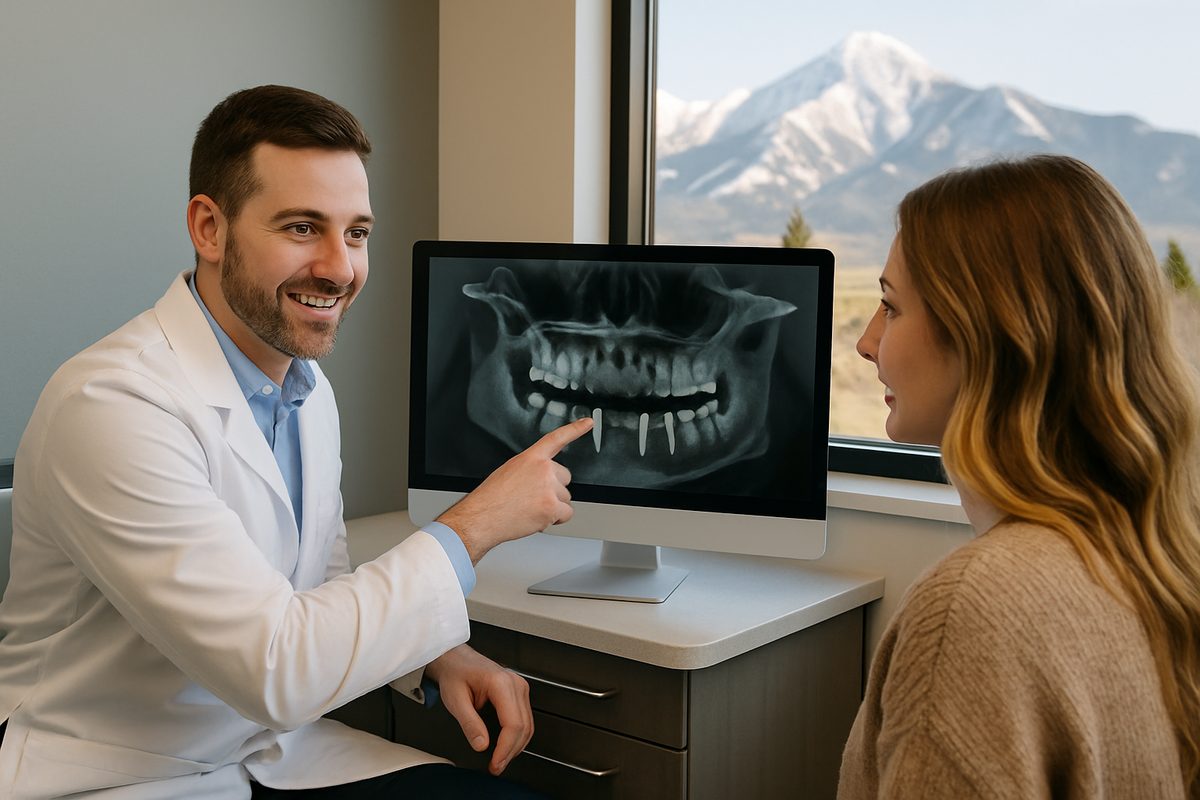
Your first visit includes an exam and imaging like a CBCT scan. Digital implant planning software maps bone and nerves and helps place implants virtually. Digital impressions create accurate models so you and your provider can review the plan before surgery.
Surgery and placement
On surgery day implants are placed through precise incisions. Many practices offer local anesthesia combined with oral or IV sedation for comfort. Guided-surgery using 3D-printed guides improves accuracy. Most patients feel pressure but little pain during the procedure and go home the same day.
Healing and restoration
After surgery, implants need time to fuse with bone—typically 3 to 6 months. Temporary teeth may be worn during healing. Once healed, final crowns, bridges, or implant dentures are attached. You’ll have follow-up visits to check healing and bite alignment.
Technology That Improves Outcomes For dental implants near me in Montana
Modern digital tools make implants safer and more predictable for those searching for dental implants near me in Montana:
- CBCT imaging to view bone, nerves, and sinuses in 3D
- Digital implant planning software for exact implant placement
- In-house 3D printing of surgical guides and models to shorten timelines
- CAD-CAM prosthetics for crowns and abutments that fit precisely
- Guided-surgery workflows that translate digital plans into accurate placement
These tools reduce risk, shorten treatment time, and improve the final fit and look of your teeth.
Comfort & Safety During The Procedure
Comfort options range from local anesthesia to oral or IV sedation. Offices follow strict infection control and use medications to manage pain and swelling. Typical recovery symptoms include some swelling, bruising, and mild discomfort that improve in a few days. Most patients return to normal activities within a week.
Risks, Complications, And How They’re Managed
Common short-term issues include bleeding, swelling, and temporary soreness. Less common problems can include infection, nerve irritation, sinus complications (for upper implants), or implant failure. Call your provider if you have severe pain, persistent bleeding, numbness, or signs of infection. Early intervention—antibiotics, adjustments, or replacing a failing implant—usually manages complications well.
Cost, Insurance, And Financing For dental implants near me in Montana
Costs vary based on the number of implants, grafting needs, materials, lab work, and technology used. Dental insurance may cover parts of the restoration but often excludes the implant fixture itself. Many practices offer financing, monthly payment plans, or care-credit options to make treatment manageable. Ask for an itemized estimate during your consult.
How To Choose A Provider For dental implants near me
Ask these key questions when looking for dental implants near me in Montana:
- What training and certification does the provider have?
- How many implants do they place each year?
- Do they use CBCT imaging and guided-surgery workflows?
- Can they show before-and-after cases and patient reviews?
- Do they use a full digital workflow (planning to final restoration)?
Providers who use a full digital workflow often offer more predictable outcomes and shorter timelines.
About Flathead Dental Implant Arts And Dr. Dave Dodrill
Flathead Dental Implant Arts in Kalispell emphasizes a warm, calm office and minimally invasive care. Dr. Dave Dodrill (DDS) completed advanced training in general dentistry and focuses on digital implant workflows, 3D planning, in-house guide printing, and sedation options to keep patients comfortable. He is active in the Flathead Valley through volunteer work and community programs, and he brings an ethical, patient-first approach to implant care.
Next Steps If You’re Searching For dental implants near me in Montana
Prepare for your consult by bringing a list of medications, any dental records or x-rays, and photos of your smile if possible. Expect a digital planning visit with CBCT imaging and a clear treatment estimate. If you’re ready, call Flathead Dental Implant Arts to schedule a digital implant planning consult and learn which implant plan fits your needs.